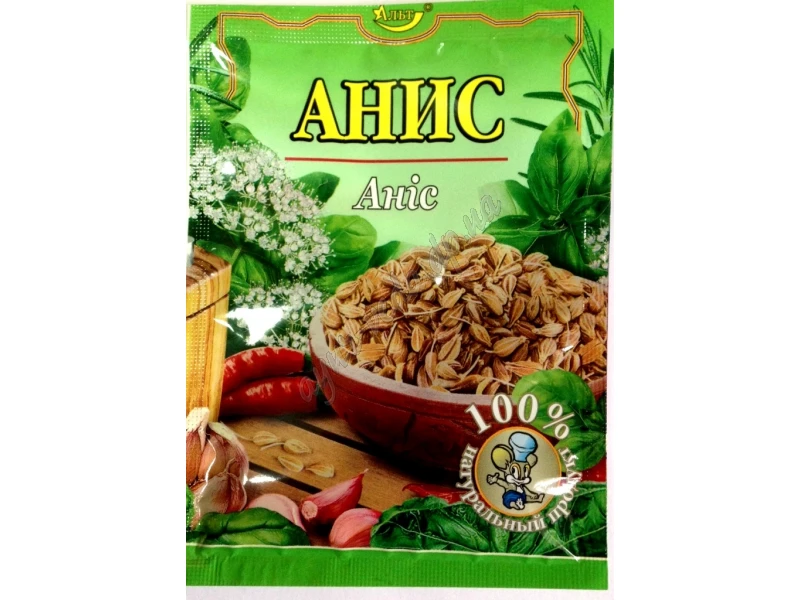
Package: 10 gr.
Anise (Pimpinella anisum L.) is an annual plant of the celery family (apiaceae), a botanical relative of dill, fennel and cumin.
Application:
In cooking, ground fruits are used, which have a refreshing, spicy aroma and sweet taste Most often, anis is added to pies, cookies, gingerbread, pancakes, cupcakes, used to prepare milk dishes (milk and fruit soups), oatmeal, sweet rice dishes, puddings, fruit salads, creams and cakes. It gives a distinctive taste to vegetables - beets, red cabbage, cucumbers and carrots - as well as fruit compotes, especially from apples, plums and pears.
Anise gives fish a pronounced spicy aroma and improves its taste, thanks to its strong antioxidant properties it prevents "rusting". Anise is used in the preparation of sourdough, pickling cucumbers, as well as for flavoring drinks, bakery and confectionery products. Many national cuisines use anise when pickling cabbage. The aroma of spices is harmoniously combined with the smell and taste of apples. This feature was used in Russia by seasoning soaked apples with anise. Abroad, ground seeds are added to dough, vegetable and grain dishes.
In cooking, both fresh anise leaves and fruits, essential oil and anise liqueurs are used. On the basis of anise, strong alcoholic drinks are produced, such as anise, pastis, ouzo, tsipouro, sambuca, absinthe.
Fresh leaves are used in salads and side dishes, as well as in the preparation of exquisite walnut jam. Seeds and essential oil - added to pies, cookies, gingerbread, pancakes, muffins, used to prepare milk dishes (milk and fruit soups), put in oatmeal, sweet rice dishes, puddings, fruit salads, creams and cakes. It gives a unique taste to vegetables - beets, red cabbage, cucumbers and carrots, as well as fruit compotes, especially apples, plums and pears. Anise is added to meat and fish dishes, soups and stews, as well as when salting cucumbers and cabbage. Anise is used in many countries to flavor alcoholic beverages - rakia in Turkey, ozo in Greece, perno in France.
It is used in Middle Eastern, Portuguese, German, Italian and French cuisines. Included in curry, hoisin sauce, sauces and pepperoni mixes.
In home cooking, anise is used much more widely and almost all parts of the plant. Green leaves, quite aromatic, are added to vegetable and fruit salads. Young umbrellas of the plant are added to vegetable and milk soups, green borscht, etc. d. They are used in marinades, when salting cucumbers, squash, and young zucchini. In Russia, anise seeds were added to soaked apples. Anise goes well with bay leaves, coriander, and fennel, and they are often used together, especially when salting.
Anise oil is distilled from the seeds and anise essence is prepared, they are also used as a spice and are used to make liqueurs and dyes for silk. Spanish and Thuringian seeds are especially valued.
Anise seeds have a sweet-spicy aroma that can "block" other smells. Therefore, this spice is used most often to flavor sea fish with the smell of iodine. To do this, anise seeds are temporarily added to the dish (in gauze bags), and then they are taken out or the water in which the product was boiled together with anise is poured.
Anise fruits are necessarily included in the set of spices added to the gingerbread dough. In many countries, anise fruits are used in the production of liqueurs, liqueurs, and vodka. And in Austria and Germany they love aniseed bread sprinkled with anise fruits.
Fat oil, produced from anise, is necessary in paint and varnish production. Waste (cake) after processing contains up to 20% protein and is used for livestock feed. This plant is a good honey bearer.
Anise has an intense, light, refreshing spicy aroma, so it is used in the perfumery, cosmetic and food industry. The seeds are one of the main components of most recipes of domestic spices, they are also used in combination with imported ones.
Medical use:
Anise fruits have a stimulating effect on the motor and secretory functions of digestion, have an expectorant and weak disinfectant effect. It has an antispasmodic effect in gastric and intestinal colic.
In folk medicine, seed infusion (anise tea) is used as an antipyretic, diuretic, and antispasmodic agent. Since ancient times, tea with anise has been used as a sedative. Infusion of seeds increases the amount of milk in nursing mothers. Burns are treated with a mixture of mashed fruits and egg white. Roots are used for skin diseases, and anise oil is used for scurvy.
It has carminative, antispasmodic, anesthetic, expectorant, and stimulating properties. The presence of essential oils makes anise an excellent antiseptic and expectorant, which makes it possible to successfully use it for cough, bronchitis, whooping cough, catarrh of the upper respiratory tract, as well as tracheitis and laryngitis. In the pharmaceutical industry, infusions, oils, syrups, and ammonia anise drops are made from anise fruits. Anise serves to improve the taste of many medicines, tooth powders and pastes.
Used in the presence of intestinal bleeding and painful menstruation, diarrhea, aerophagia, bloating, dyspepsia of nervous origin, nervous vomiting, migraines associated with digestive disorders, as well as dizziness, increased palpitations, asthma. It is famous as a good remedy for scurvy and an excellent diuretic.
Seeds (fructus s. Semina Anisi vulgaris) have an excitatory effect on the mucous membrane of the stomach, cause miscarriage, increase the secretion of milk, contain fatty and essential oils, mucilaginous sugar, gum and anisic acid.
Content of useful substances:
Anise fruits contain fatty oils, protein substances, sugar, furfural, caffeine and chlorogenic acid and other substances.
The composition of the essential oil includes anethole - 80-90%, methylhavicol - 10%, as well as phellandrene, pinene, dipentene, camphene, acetaldehyde, anisceptone, protein. The endosperm of seeds contains fatty oil up to 28%, protein substances - 17-19%.
The healing properties of anise have been known since ancient times and used in folk medicine.
Anise fruits contain 2-3% of essential oil, which includes anethole (80-90%), methylhavicol (10%). It is they who create the typical aroma of anise. In addition, anise fruits contain 4-23% fatty oil, 18% protein substances, 3-5% sugars, some acids and other useful substances.
Essential oil - 2-4%, the main component of which is anethole (80-90%) was found in the receptacles of the pericarp. The composition of the oil also includes methyl havicol (about 10%), anisic aldehyde, anisic acid, anisic ketone.
It is interesting that anise oil has a substitute recognized by the pharmacopoeia as absolutely equivalent. This essential oil is made from the fruit of the badya-na tree, which grows in Southeast Asia. The oil from the fruits of that and the second plant is indistinguishable in smell and composition. But star anise and anise are not relatives at all: in fact, there is something in common between transparent umbrellas and the exotic magnolia family.
The advice of the chef:
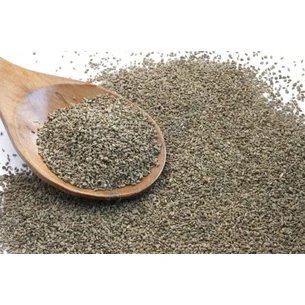
The dark color of anise seeds with a brown tint is a sign that the seeds are old and a special aroma cannot be obtained from them.
Anise seeds are best bought whole and stored in tightly closed jars away from direct sunlight.
The root is taproot, weakly branched, penetrating the soil to a depth of 50-60 cm. The stem is high (60-70 cm), rounded, grooved, branching in the upper part. Basal rosette leaves are round-heart-shaped, serrate-toothed, long-petioled, middle - with short petioles, pinnately dissected with wedge-shaped lobes, upper leaves are sessile, three-parted with linear lobes. Inflorescence is a complex umbrella consisting of 7-15 simple umbrellas. The flowers are white, small. The fruit is an egg-shaped dicot with a slight depression, 3-4 mm long, 1.5-2.5 mm in diameter. When ripening, the fruits easily split into two pods, each of which carries one seed. Ripe fruits are greenish-gray with a spicy smell, sweet to the taste. The weight of 1000 seeds is 3.5-5 g. The plant is cross-pollinated. It is pollinated mainly by bees.
Requires warmth, moisture and soil fertility. During flowering, clear warm weather is necessary, rainy and cold weather contributes to the disease of inflorescences and weak seeding of umbrellas. During the period of flowering and fruiting, drought and dry weather lead to the thinness of the seeds and their low oil content.
From the beginning of germination to the ripening of the seeds, 110-120 days pass at a total effective temperature of 2000-2200 °C. Anise is a long-day plant. Seed germination begins at a temperature of 3-4 °C, the optimal germination temperature is 25 "C. Sprouts appear after 15-17 days, and with insufficient heat - after 25-30 days after sowing (they tolerate small frosts).
Characteristics and origin:
Anise is one of the oldest essential oil and medicinal plants. Its healing properties were known in It is believed that this plant was first cultivated in Ancient Rome and Greece.
The ancient Romans were the first to use anise seeds for health purposes, and in the first century of Rome, anise was used in a popular pie in bay leaves and consumed after feasts. Aniseed plants were tied to the headboard to get rid of nightmares.
the repair of the London bridge. Anise is described in the herbaria of many diseases. It was the time when King Edward I imposed a tax on the import of this product. It was compared to such spices as fennel and cumin use for flavoring of nuts, honey and raisins, sprinkled with meat, cold dishes planted the first plantations, and a little later Russia became the main supplier of anise on the international market, which continued until the First World War.
Anise is currently grown in Lebanon, Greece, and Cyprus in many countries: Spain, Italy, Turkey, and the United States. Cultivated in Moldavia, Ukraine, in the North Caucasus. The second name: spicy-sweet, makes a person optimistic, improves mental activity.
This plant was introduced to culture in the 30s of the last century. 10 grm., Ayurveda Here is the best selection of Ayurvedic products for you and your family