Package: 100 g.
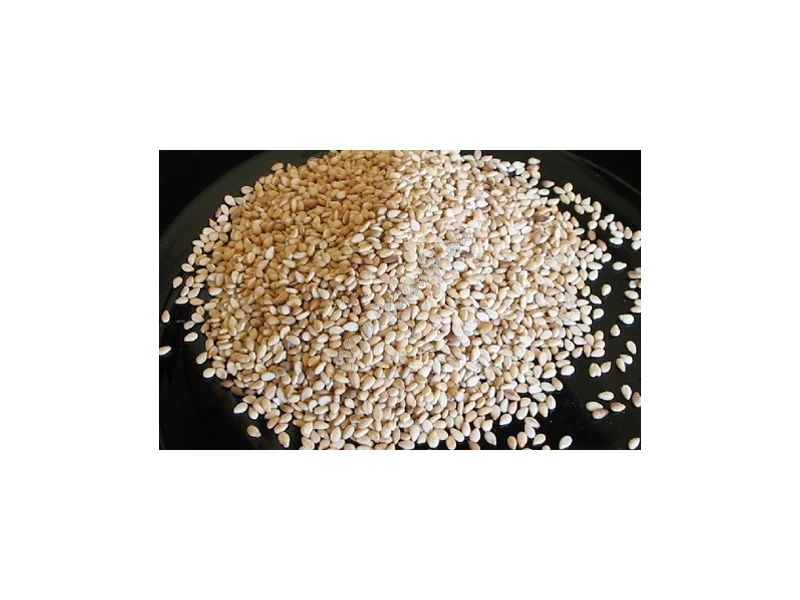
Sesame is the white seed of an annual tropical herbaceous plant, the homeland of which is India. It has a sweet nutty taste and contains up to 50% fatty oil. Sesame is used as a seasoning for vegetable dishes, as a breading for fish and chicken, as well as to give texture and flavor to various types of bakery products, crackers and salad dressings.
Since sesame is an oilseed, the main purpose of its cultivation is to obtain sesame oil, but sesame seeds are also used very widely.
These seeds are very tasty, especially if they are toasted - the taste is oily, nutty, slightly sweet. In the box, which is a sesame fruit, there are many such seeds, and they contain up to 60% of useful oil.
Producer: MPP firm "Yamuna", str. Dvoretska, 182, Rivne, Ukraine, 33001
Term of implementation: 12 months. The date of manufacture and the deadline for implementation are indicated on the packaging. Store in a cool (8 - 25 °C) place protected from light.
100 g of sesame seeds contains 565 kcal, it contains carbohydrates, proteins, fats, dietary fibers, sugars, starch, saturated and unsaturated fatty acids, vitamins - E, PP, group B, minerals - calcium, sodium, magnesium, phosphorus, potassium, iron.
The energy of plants is amazing - because their seeds carry new life, make their way to the sun and grow, overcoming many difficulties, so their usefulness and nutritional value are not in doubt. Among the multitude of plant seeds, the sesame seed occupies, if not a special place, then a rather noticeable one, especially in cooking, although its medicinal properties have been known to people for more than a thousand years.
Those who have read the fairy tales "Thousand and One Nights" - an amazing collection of Arabic fairy tales, probably remember the magical cave in which Ali Baba fell. To get in or out, you had to say the magic words: "Sesame, open!", and the stone walls opened, revealing countless treasures. This is the same "sesame" (in Arabic simsim) - and there is sesame - an annual herbaceous plant Sesamum indicum, and its name is translated from the languages of all eastern nations as "oil plant".
Today, sesame is grown in many regions of our planet: in Africa, Asia, and even America, but the largest producer of sesame in the world remains India - it grows and produces a third of all sesame, which sold on world markets. Many varieties of sesame are grown in India, but in recent years, Chinese sesame producers are not inferior to Indian ones, and even often surpass them, exporting sesame to many countries.
Since sesame is an oilseed crop, the main purpose of its cultivation is to obtain sesame oil, however, sesame seeds are also very widely used.
These seeds are very tasty, especially if they are fried - tasty, oily nutty, slightly sweet. There are many such seeds in the box, which is a sesame fruit, and they contain up to 60% of useful oil.
Sesame composition, benefits and properties
In order to better understand the benefits of sesame, it is necessary to understand at least a little about its chemical composition. Sesame seeds are high in calories, but not enough to contribute to weight gain - for this you would need to eat them in kilograms.
100 g of sesame seeds contains 565 kcal, its composition includes carbohydrates, proteins, fats, dietary fibers, sugar, starch, saturated and unsaturated fatty acids, vitamins - E, PP, group B, minerals - calcium, sodium, magnesium, phosphorus, potassium, iron.
Let's analyze the composition of sesame in a little more detail. Fatty oil, which is abundant in sesame seeds, contains organic acids: oleic, palmitic, linoleic, linoleic, stearic, lignoceric, arachinic, phytosterols - active substances contained in plants that contribute to the maintenance of normal cholesterol levels in the blood, normalize the work of the endocrine and immune systems, and have cleansing and rejuvenating properties. Women whose body receives enough phytosterols retain their reproductive functions longer.
Sesamin has antioxidant properties, maintains a normal level of glucose in the blood and helps to get rid of excess weight if necessary.
Sesamolin is also an antioxidant that protects and rejuvenates cells, helping the body to relieve the effects of stress and tension.
Sesamol also has strong antioxidant activity, so the oil obtained from seeds sesame can be stored for a very long time, and at the same time it does not oxidize.
Of course, these substances are contained in sesame seeds in small quantities, but there are more of them in oil - there they are in a concentrated form, so regular use and use of both oil and sesame seeds can significantly slow down aging.
Sesame seeds can remove toxins, decay products, formed in the process of metabolism. And here, too, it is preferable to use oil - simply because the content of useful substances in it is higher than in seeds, and it can be used in much smaller quantities.
In Asian countries, sesame oil is added to many dishes, and meat is often cooked with it, which makes it possible to reduce the "harmfulness" of meat dishes.
The smell of sesame oil is explained by the presence in it of compounds that are formed in the process of its production - in chemists call them aroma-forming substances.
Since there is a lot of calcium in sesame, it is simply necessary for people who do not consume dairy products: it is enough to eat 100 g of seeds, or add a couple of spoons of oil to a salad, to get the daily norm of calcium necessary for an adult. And for those who use dairy products, it is also possible to partially replace them with sesame.
For example, milk is far from always useful, and is often poorly absorbed and difficult to digest, especially by adults. Replace milk with products based on sesame, and you will very soon feel how it will become easier for you to move.
It has been noted that in eastern countries, where sesame oil is a traditional part of the diet, the bones of elderly people are much stronger than in countries with a European food system.
Doctors recommend sesame for the treatment of lung diseases, shortness of breath, asthma, blood problems - anemia, bleeding, acidity and poor coagulation, constipation and diabetes.
Here are some recipes that include sesame seeds.
You can take seed powder as a tonic and cleansing agent. The seeds are crushed and consumed 15-20 g (3-4 tsp) 3 times a day before meals, drinking them down with water. You can take sesame oil, not less than 25-30 ml per day - it has a tonic and anti-toxic effect.
If the stomach is upset, it should be dissolved in 150-200 ml of cooled boiled water for 1 hour. l. honey, add 1-2 tsp. l. sesame seeds ground into powder, stir and drink in small portions during the day until the diarrhea stops.
When applying the powder, toasted sesame seeds are mixed with oil (perhaps just with sesame) and the mixture is applied to inflamed areas of the mammary gland.
Sesame seeds are taken as a rejuvenating agent. 1 Art. l. seeds are mixed with ground ginger and powdered sugar (1 tsp each), and taken 1 tsp each. l. this mixture 1-2 times a day.
White sesame, 100 g, White sesame, sesame, Ayurveda Zdes
Ayurveda Zdes! - an online store of Ayurveda, cosmetics, Indian tea, spices, Indian clothing and jewelry. The best selection of Ayurvedic products in Ukraine! Beauty and health for you and your family, esoteric shop, esoteric shop, souvenir shop, Indian souvenirs, incense, bijouterie, agarbattis, Ayurvedic preparations from India,