180 pages
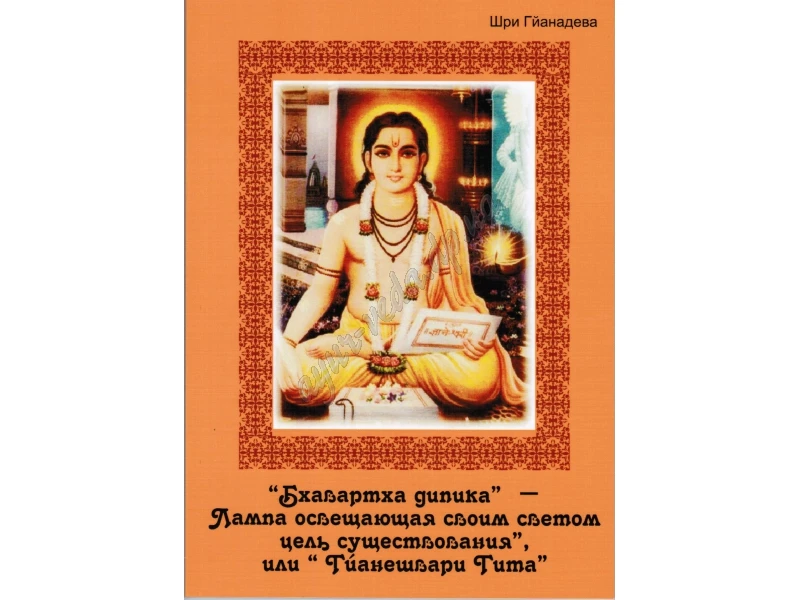
An amazing book of a holy man!
Saint Gyaneshwar was the second of four children of Vithalpant and Rukminibai Kulkarna, a pious married couple from the village of Apegao near Paithana
(old Pratishthan) in Maharashtra on the banks of the Godavari River.
Being extremely pious and detached from worldly matters, the saint's father spent most of his life in pilgrimages. After getting married, he could not overcome his desire for a hermit lifestyle. And for some time he left his family and accepted sannyas. Although from the point of view of spiritual laws, he had no right to this, since he had a family and had to fulfill the obligations of family life. After some time, his guru learned about this and ordered him to leave sannyasa and return to his family. But the local Brahmins did not forgive Vithalpant and his entire family for this mistake. Because of that, the whole family was persecuted. In the end, the parents drowned in the Ganges at the holy place of Deva Prayag, following the advice of the Brahmins from the village of Apegao. They believed that in this way they would remove the burden of the father's sinful mistake and the children would be blessed with further education and relationships in their environment, among Brahmins. But the Brahmins still did not allow poor children to study in their schools.
Orphan children continued to grow, getting themselves fed by alms, which they asked from sympathetic people. After some time, they tried to get closer to the Brahmin community of Paithana, hoping that they would be accepted into their caste by performing the appropriate rites and purifications, but the Brahmin community refused to do this. However, seeing the excellent behavior of the children and their desire for education, they allowed them to live in the community on the condition that they observe the vow of celibacy and not having children. It was in 1287, when Gyanadeva was 12 years old.
It must be said that even during the lifetime of his parents, the eldest son in the Nyvritta family received initiation into the spiritual tradition of the Nathavs from one of the famous Nathav masters. In this way, he himself became a master nath and taught the younger ones as a spiritual teacher. Gyanadeva was also initiated by him in the tradition of the Naths. Under the guidance of his fourteen-year-old guru, Gyanadeva, at the age of twelve, he began to write a commentary on the Bhagavad Gita, which would later be called Gyaneshvara.
(The entire biography of Gyanadeva and his family is given in the book)
Gyaneshvari Gita, Gyaneshvari Gita, Ayurveda Here
Ayurveda Here! - online store of Ayurveda, cosmetics, spices. The best selection of Ayurvedic products in Ukraine! Beauty and health for you and your family! http://ayur-veda.dp.ua