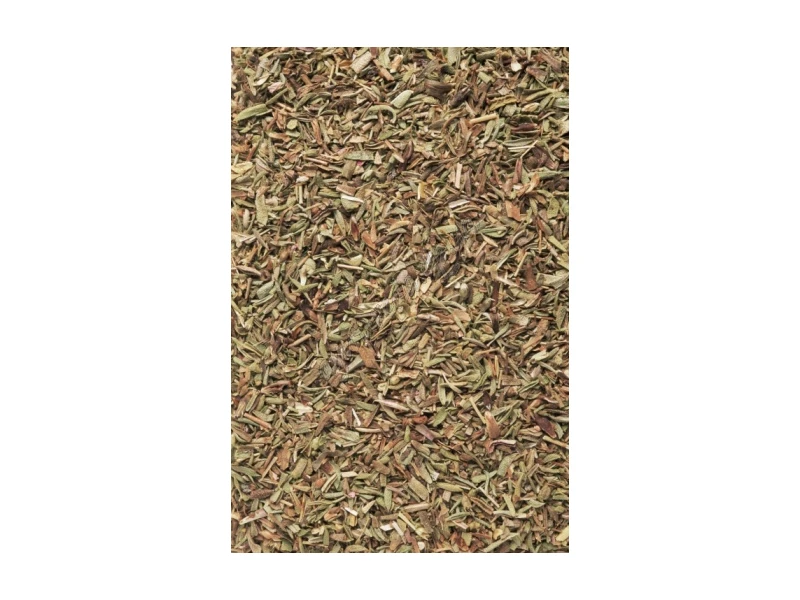
An unusual piquancy is given to meat dishes by a rather rare species - caraway thyme Th. herba-barona. It is excellent in combination with garlic and wine (an inseparable pair of Mediterranean cuisine), and best of all with fish and grilled chicken. However, a subspecies of wild thyme is quite common in cooking - lemon thyme Th. citriodorus with pronounced lemon tones. Its tiny heart-shaped leaves go especially well with seafood and sweet dishes. The citrus aroma facilitates the absorption of fatty food (natural essential oils generally promote digestion), so lemon thyme is recommended to be added to potatoes fried in lard, scrambled eggs, minced meat, smoked meats, pork, lamb, duck, pate, mushrooms, cottage cheese, game and cheese, and also in very small quantities to fried fish, roast, offal and veal.
It is interesting to use lemon thyme in the classic French (or rather Gascon) product "confit" - that's how they call the peculiar canned duck, goose or pork. Meat for confit is first salted to remove water, then stewed for a long time on the lowest heat in its own fat until it becomes tender, melting in the mouth, cooled, put in a clay pot and poured with fat to block the access of air. In the process of ripening, the meat acquires a completely new taste and smell and can be stored in a cold place for quite a long time. The confit is fried in a pan or on the grill until crispy and served, for example, with fried porcini mushrooms and potatoes baked in cream.
Fresh and dried leaves and young shoots of all types of thyme are used, like marjoram, in dishes made from peas and beans, as well as in the preparation of sausages. Thyme is one of the main aromatic herbs of French cuisine and is necessarily included in the "bouquet of flowers" and "herbs of Provence", and in Spain, Greece and Turkey, thyme oil is used for pickling olives. Thyme is popular not only in Europe, it is part of the Jordanian seasoning "zakhtar" and the Egyptian mixture "dukka". In Central Europe, thyme is added to soups and egg dishes, and in the kitchen of the American state of Louisiana, it is added together with sassafras to the crown Creole dishes "gumbo" and "jambalaya".
We will dwell on the second dish in more detail - perhaps it will interest you. Jambalaya, or yambalaya, is a stewed mixture of rice, chicken (or pork), vegetables (essentially tomatoes), shrimp, crab, oysters, chicken, ham, and spices (essentially thyme), served with spicy tomato sauce or ketchup. In fact, this is a version of the famous Spanish paella brought to the New World by the conquistadors, but as befits true Creole cuisine - with a lot of pepper and spices (although without the rare and expensive saffron). Culinary terminology of the state of Louisiana was largely created by people from France, so it is assumed that the name jambalaya goes back to the French jambon (ham). Indeed, available ham in the classic and rather uncomplicated jambalaya was once the main ingredient, and seafood and chicken appeared much later. Jambalaya is widespread not only in Louisiana - it is also a favorite of Brazilian cuisine. However, only Louisiana can rightly be proud of this culinary creation - in the Louisiana city of Gonzalez, which has proclaimed itself the "jambalaya" capital of the world, a jambalaya festival is held annually on a large scale, where chefs demonstrate their imagination and ingenuity. There is no unified recipe for the dish - every housewife and every restaurant in Louisiana prepares it in their own way
A small amount of common thyme is added to fried fish, liver, offal and veal. Thyme emphasizes the taste of bean, lentil and pea soup, sauces and potato salads. The aerial part of the plant before fruiting is used in the production of beverages. Leaves and young shoots of thyme are used as a salad, for pickling cucumbers. They are used to flavor sausages, vinegar, cocktails, and tea. Fresh and dry leaves are used for these purposes.
Essential thyme oil is used in perfumery and the canning industry. Valuable honeydew.
Medicinal use:
Thyme (thyme) is used in official medicine in the form of a decoction and liquid extract as an expectorant for catarrh of the upper respiratory tract, bronchitis, pneumonia, as a pain reliever for radiculitis and neuritis, as a lactogenic agent, for gynecological diseases. Externally for aromatic baths, compresses and lotions. Thyme extract is part of "Pertussin" - a cough medicine.
Oil serves as a source of thymol, which is widely used for disinfection of the mucous membrane of the oral cavity and pharynx. Thymol also has an anthelmintic effect, it is used for the treatment of worm infestations (in the treatment of ankylostomidosis, trichocephalesis and nekatorosis). Sometimes thymol is prescribed internally as an astringent for gastrointestinal disorders and flatulence. It should be noted that thymol is contraindicated in decompensation of cardiac activity, liver and kidney diseases, gastric ulcer disease, and also during pregnancy.
In folk medicine, the plant was used as a diuretic, anticonvulsant, and sedative, for whooping cough, neuralgia, and stomach spasms. In the form of ointments and lotions, thyme was used for rheumatism, as a wound-healer for skin diseases.
Content of useful substances:
The herb thyme (thyme) contains 0.1-0.6% essential oil, tannins and bitter substances, gum, resin, flavonoids, organic, mineral salts. Essential oil of thyme is a colorless or light yellow liquid with a strong pleasant smell, which includes thymol, tannins, bitterness, serpylin, etc.
Chef's advice:
Store dried thyme (thyme) in a dry, dark place in a tightly closed porcelain or glass container.
Thyme fully reveals its aroma during long-term heat treatment, so it is put at the very beginning of cooking.
Characteristics and origin:
Hundreds of species of thyme of the genus Thymus grow almost throughout Eurasia, in North Africa, on the Canary Islands and even in Greenland.
The first written mention of thyme dates back to the third millennium BC. e. - the ancient Sumerians used it as an antiseptic, and the ancient Egyptians used it as one of the components in the complex process of embalming.
The Latin generic name of thyme comes from the Greek thymiam (frankincense, fragrant smoke) - the Greeks dedicated it to Aphrodite and burned it in the temples of the goddess. It has long been believed that thyme gives courage, and Roman soldiers took baths with thyme before the battle, and Scottish highlanders (those with baths were more difficult) drank tea with wild thyme for the same purpose. The fame of the plant as a symbol of courage has passed through the ages - in medieval Europe, ladies embroidered a sprig of thyme on the shirts of their knights in the hope that it would give them courage in battle and remind them "who in the world is more fragrant".
Theophrastus and Avicenna also wrote about the properties of thyme, who included thyme seeds in the composition of complex medicines based on honey, vinegar, oil or wine together with seeds of cumin, celery, parsley, mint, valerian, hyssop, asafoetida and garlic. He is echoed by modern specialists, who claim that "thyme helps open up insecure, sensitive, nervous natures, restores strength and awakens emotions..." (annotation of one of the patented tonic agents)... So feel free to add Bogorodskaya grass to your dishes, but keep in mind that due to the high content of thymol, thyme can have an irritating effect on the stomach, liver and night. Therefore, if you suffer from peptic ulcer disease, treat thyme with caution. And please do not confuse thyme with thyme - these are completely different herbs, although in many medieval medical works thyme as a medicinal plant was always advised to be used in the same way as thyme...
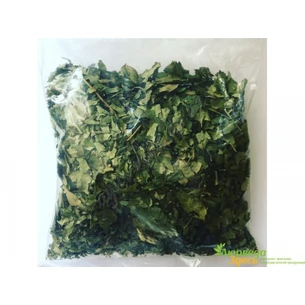
Dried thyme, thyme, 50 gr., Thymus, Ayurveda Here
Ayurveda Here! - online store of Ayurveda, cosmetics, spices. The best selection of Ayurvedic products in Ukraine! Beauty and health for you and your family! http://ayur-veda.dp.ua