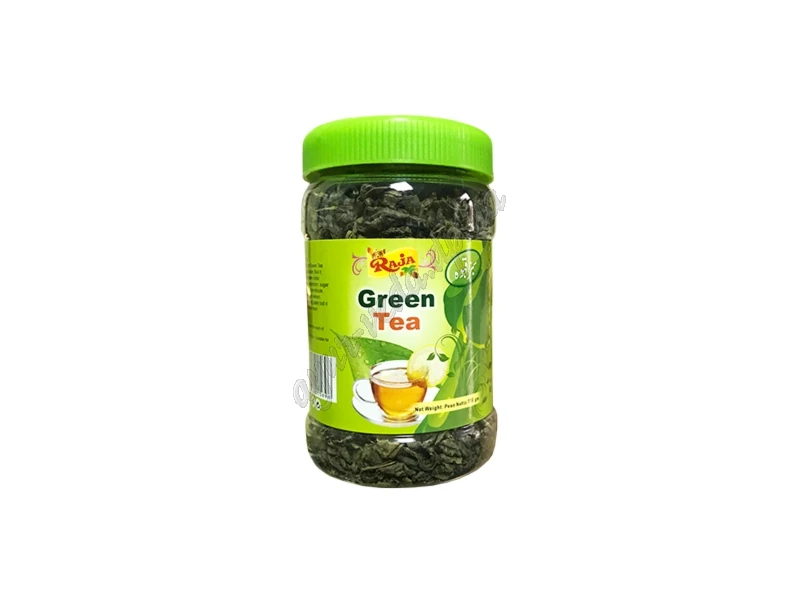
Package: 110 g
Green tea leaf contains a significant amount of vitamin C, inferior in this respect only to some varieties of rose hips. Green tea contains more vitamin C than black tea, as much of it is lost during fermentation. Another important component is vitamin K, which increases the ability of blood to clot. In addition, tea contains vitamins B1, B2, PP, pantothenic acid and vitamin E.
Essential oils, which are mixtures of various organic compounds: carbohydrates, aldehydes, ketones, alcohols, acids, phenols, play an important role in the formation of the aroma of tea. In the tea plant, the largest amount of essential oils is contained in the buds, first and second leaves. The content of essential oils in a tea leaf increases sharply when it dries up and especially when it is twisted, and decreases somewhat in the semi-finished product, remaining at the same time much higher compared to the green leaf. Individual components of tea essential oil can have the smell of rose, honey, lemon, jasmine, determining the complex aroma of the drink.
Tea leaf also includes alkaloids: caffeine, theobromine and theophylline, which have a stimulating effect on the human body. The caffeine content, which accumulates in all above-ground organs of the plant, and especially in the young leaf, can reach 3-5% per ASR. The total amount of theobromine and theophylline does not exceed 0.6-0.8%. A high caffeine content indicates good quality tea: high-grade tea contains 3-4% caffeine, and tea from rough raw materials - up to 1%. When processing a tea leaf, the caffeine content is slightly reduced, because it reacts with phenolic substances, in particular with tannin, forming compounds that cause cloudiness of strong tea after it cools.
Caffeine in tea relieves fatigue, increases mental and physical activity, stimulates the heart, brain, and respiratory organs. However, it is weaker than the caffeine in coffee. Therefore, drinking tea does not cause palpitations or insomnia. Other tea alkaloids have a minimal effect on the body compared to caffeine.
Water-soluble carbohydrates in tea are mainly glucose, fructose, sucrose, raffinose, stachyose, and insoluble - fiber, cellobiose and a small amount (less than 1%) of starch. Tea leaf sugars play an important role in the formation of the taste, appearance and aroma of tea, because at elevated temperatures they interact with amino acids and form aldehydes with different smells (floral, fruity, honey). Insoluble carbohydrates in tea impair its quality. Pectin substances of tea leaves are presented in both soluble and water-insoluble forms. High-quality tea leaves collected in July-August contain a significant amount (up to 2.0-3.5%) of soluble pectin substances. In the process of obtaining tea, the amount of soluble pectin compounds decreases to 1.5-2.0%.
Tea leaves contain proteins, and in tender leaves the amount of protein can reach 30%, and in mature leaves the protein content is much lower. When processing the leaf, especially in the process of withering and further processing, protein substances are hydrolyzed with the formation of amino acids, which, together with sugars, take part in the formation of the taste and aroma of tea during fermentation and drying of the tea leaf. Proteins are denatured in the drying process.
The pigments of tea leaves are represented by chlorophyll, carotenoids and flavonoids. Chlorophyll is a component of green leaves and plays a central role in the reactions of photosynthesis. During the processing of tea leaves during the production of black tea, a large part of the chlorophyll is destroyed. The content of green pigments in the finished tea deteriorates its quality, as it gives the infusion a greenish color and a grassy aftertaste. Carotenoids are contained in tea leaves in much smaller quantities than chlorophyll, their oxidation leads to the formation of aldehydes, which affect the aroma of black tea. The flavonoids of tea leaves also affect the aroma of tea, since their decomposition leads to the formation of aromatic substances (alcohols, aldehydes). Most of all flavonoids are contained in the tender leaves of the leafy plant.
Tea leaves contain organic acids (malic, oxalic, citric, succinic, pyruvic), their amount varies depending on the age of the plant and the quality of the leaf, as well as the stage of processing. A high content of organic acids worsens the taste of tea.
Of the minerals in tea leaves and tea, the most potassium compounds (about half of the total amount), high content of phosphorus, iron, calcium, and magnesium compounds. In addition, tea contains fluorine, iodine and other elements. As the tea leaf ages, the total amount of minerals increases, and the most valuable soluble part decreases.
Raja green tea, Raja, 110 g, Ayurveda Zdes