Package: 50 g.
Type:
Fennel (Foeniculum vulgare Mill) is a perennial herbaceous plant of the celery family (apiaceae).
It looks like dill, and the taste and aroma is closer to anise, but with a sweeter and more pleasant taste. Fennel can be ordinary or vegetable, the latter has a fleshy trunk. It should be determined very carefully: it can be confused with other, poisonous umbrella plants!
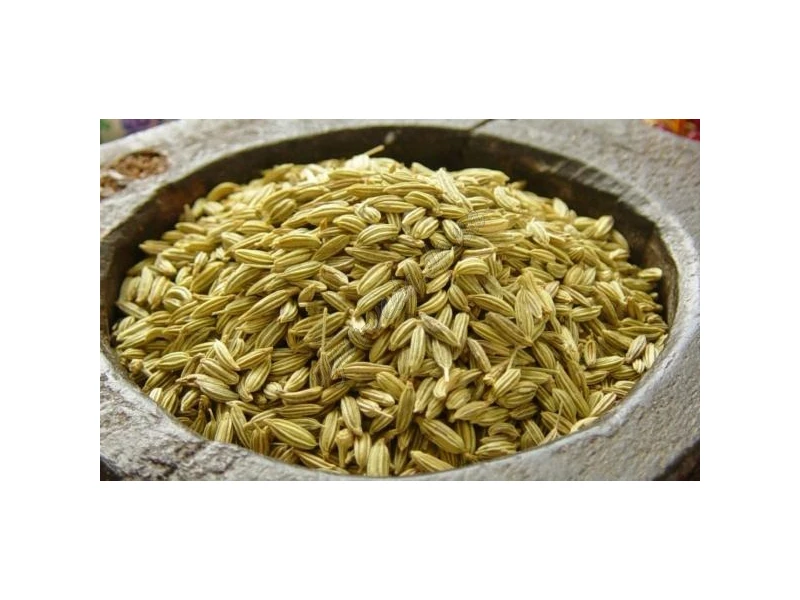
The root is spindle-shaped, sparsely branched. The stem is erect, round, with inconspicuous grooves and a bluish coating, strongly branched above, slightly ribbed, smooth, branching, with a bluish coating, 2 m high. The leaves are bluish, dissected into long, narrow, almost filiform lobes, turning into a grooved petiole at the base. Flowers are compound umbrellas, small, yellow. The fruit is an oblong, glabrous, brown-green, 6-10 mm long, 1.5-3 mm wide, 1-1.5 mm thick. The mass of 1000 seeds is 5-6 g.
Medical use:
Fennel has an expectorant and disinfecting effect. In traditional medicine, a decoction of fennel is drunk for flatulence, abdominal pain, cough, insomnia, as well as to improve the production of milk in nursing mothers.
Biological effect of fennel: carminative, relieves spasms of the gastrointestinal tract, antimicrobial, expectorant, etc.
Fennel is required for the following conditions and diseases: flatulence, spastic conditions of the gastrointestinal tract, irritable bowel syndrome, bronchitis, pneumonia, etc.
Fennel fruits are used in medicine in many countries. The leaves are used for medicinal purposes in France, the roots are used in Portugal. Seeds are a good cough remedy. Many people know "dill water", which is given to children with gas accumulation. But not everyone knows that this water has nothing to do with dill and that it is prepared from fennel. The fact is that the people call fennel a pharmacy dill for its resemblance to a garden plant and high medicinal properties.
In Indian medicine, the fruits are used as a stimulant, and the roots are used as a laxative. In the USA, fennel is used for eye and intestinal, kidney diseases, and flu.
It has a diuretic, carminative, laxative and disinfectant effect. It is used for flatulence, abdominal pain, cough, insomnia, as well as to improve milk production in nursing mothers.
Undisputed disinfectant properties of fennel. In fact, a decoction of its seeds is used to wash the eyes with conjunctivitis, the skin with purulent diseases. Fennel is used for cough, insomnia, stomach aches, to stimulate milk production in lactating mothers. Has a diuretic and mild laxative effect. Acting on the digestive system, it eliminates constipation, flatulence, nausea.
In the climacteric period, fennel oil is very effective, as it stimulates the production of its own estrogen. Promotes increased lactation. Along with this, fennel has high antifungal activity. When renovating premises, the content of fungi in the atmosphere is reduced by 4-5 times.
Fennel oil has a hepatoprotective effect in toxic liver damage. Increases appetite, secretion of digestive and bronchial glands. It has a beneficial effect on the skin.
Rinsing the oral cavity with a decoction of fennel eliminates pain in the throat and hoarseness of the voice. To use the healing properties of fennel, grind it into powder and in the morning, afternoon and evening, half a teaspoon each time, brew it in a small cup of boiling water and, after sweetening, eat it. This composition helps with flatulence and facilitates digestion.
Main properties:
- anti-inflammatory, healing, antioxidant
- bactericidal, anthelmintic, diuretic, carminative
- dilates heart vessels
- analgesic, antispasmodic
- expectorant
- soothing
- enhances the separation of milk
- smoothes out wrinkles and evens skin color
Indications for use:
- chronic bronchitis, pulmonary tuberculosis, bronchiectasis, bronchial asthma
- IBS, angina pectoris, cardiosclerosis, vegetative-vascular dystonia
- reduced lactation
- gout, urolithiasis
- urinary tract infection, cystitis, pyelonephritis
- gastritis, hepatitis, gastroduodenitis, enterocolitis, dysbiosis
- menstruation delay
- alcohol and nicotine poisoning
- pharyngitis, stomatitis
- problem skin
Court physician of Ferdinand I P. AND. In 1563, Mattiol published in Prague the treatise "The power and action of fennel", where he provides information about the healing properties of this plant, which are still recognized in folk medicine, as well as partly in homeopathy and scientific medicine. In modern language, it sounds roughly like this: fennel helps with indigestion, bloating, loss of appetite, mucous phlegm, painful menstruation, inflammation of the eyes, diseases of the biliary tract and liver, insufficient lactation, nervous anxiety, abscesses and inflammation of the mammary glands. Sebastian Kneipp praised the action of fennel tea especially for coughs, lung diseases and as an antispasmodic agent for whooping cough and asthma. Fennel tea is especially noted as a remedy for headaches associated with poor digestion.
Content of useful substances:
The characteristic smell is caused by the content of anethole and fenchone in the plant. Fruits contain up to 6% of essential oil, up to 12% of fatty oil, as well as proteins, sugars, etc. Fennel contains a large amount of vitamin C - 50-90 mg%, carotene - 6-10 mg%, vitamins B, E, PP.
Essential oil is a colorless or slightly yellowish liquid with a characteristic smell, the taste is bitter at first, then sweet. The composition of the oil includes: anethole - 50-60%, anisic aldehyde, anisic acid, methylhavicol, fenchone, pinene, camphene, phellandrene.
The effect of fennel is connected with anethole, pinene, phellandrene, camphene, fenchol, limonene, which are included in the composition of Ego essential oil. The oil has a slightly spicy, sweet, anise-like aroma.
Characteristics and origin:Fennel or sweet dill has been known since ancient times. The family of fennel is Southern Europe, the Mediterranean region and Asia Minor. Even the ancient Greeks, Romans, Egyptians, Indians and Chinese used it as a spice and medicine. He got into Central Europe in the Middle Ages. It is believed that he prolongs life, increases strength and expels spirits. Sebastian Kneipp praised the action of fennel tea for coughs, lung diseases and as an antispasmodic agent for whooping cough and asthma. Fennel tea is especially noted as a remedy for headaches associated with poor digestion.
It is grown in large quantities in France, Italy, Poland, Japan, and Argentina. In our country, it is wild in the Crimea. As an industrial crop, fennel is cultivated in Ukraine, Moldova.
Fennel is cultivated for the sake of fruits with a sweet, spicy aroma, reminiscent of anise, and a sweet, slightly spicy taste. In summer and autumn, ripe umbrellas are collected, dried at a temperature of 35 degrees and threshed. Currently cultivated in Northern Europe, the Mediterranean, North and South America, China, East India.
The plant Foeniculum vulgare of the umbrella family, the fruits of which are used in cooking. It has been valued for thousands of years for its delicate aroma, slightly similar to anise liqueur. Fruits with a pleasant smell and sweet taste are used to stimulate appetite and improve digestion. This is a tall, sturdy plant with thin, dill-like leaves and golden-yellow flowers. After the flower dies, the seeds form clusters and are harvested when they harden. Fennel seeds are small, oval-shaped, greenish-brown in color, they can be consumed whole or ground. The bulb, pinnate leaves, stems, flowers and seeds were popular even among the Romans and in Ancient Greece, fennel was used by the cooks of Ancient China, India and Egypt. The ancients believed that fennel seeds especially help with poor eyesight. It was also believed that they give strength. In ancient Greece, they were considered a symbol of success. In more recent history, the Puritans called fennel the "meeting seed" because they liked to chew fennel seeds during their meetings. Indian restaurants often serve plain or sugar-coated seeds after dinner as a dessert or breath freshener. It is also used to improve digestion.
Fennel is a spicy-aromatic plant that became known to man many years before our era. We find the first mention of it in Pliny, who first of all notes the healing power of this plant. For a long time, it was believed that fennel has an unusually strong effect on the restoration of vision. Cataracts, conjunctivitis, etc. were treated with fennel. d.
Pious English Puritans refreshed their breath during their long prayers by chewing fennel seeds.
The ancient Greeks called the plant "marathon", connecting it with the name of the battle site where they won a victory over the Persians in 490 BC. The plant was considered a symbol of victory and success.
Widely known seasoning, as well as one of the oldest medicines. The ancient Greeks and Romans believed that the smell of fennel gives a person strength, drives away evil spirits, kills fleas, and freshens the breath. Another name for fennel is apothecary dill. Essential oil is made from the ripe seeds of the plant. It has a sweet, spicy, warm aroma.
Cultivation:
Fennel loves heat and light, so it winters well in southern regions. The duration of the growing season is 130-170 days, the sum of active temperatures must be at least 2500 °C. Seeds retain germination for two to three years. Fennel is undemanding to soils.
Plants begin to bloom in the first hour. Flowering is protracted and lasts from June to August. Fruits ripen in August - early September, when ripe, fall off easily.
Seeds begin to germinate at a temperature of 6-8 °C. Seedlings appear after 12-14 days, tolerate frosts down to -8 °С.
There are 5 species, they grow mainly in Europe and Africa. Common fennel is a spicy (leaves), essential oil (seeds) and medicinal (oil, seeds) crop grown in Eurasia, North-Eastern Africa, the USA, and Ukraine. We get it from China, Bulgaria, Hungary and Egypt.
Application:
Fennel fruits are used in the production of liqueurs, confectionery products, mainly cookies, pies and puddings. It is rightfully popular for cooking fish dishes (especially carp), sauces (for example, mayonnaise), soups, and sometimes compotes.
It gives a special aroma to sauerkraut, canned vegetables (especially cucumbers) and cold snacks. Fresh shoots with leaves and immature umbrellas improve the taste of salad marinades.
Fennel fruits contain 12-18% fatty oil, which is used as a substitute for cocoa butter. They are included in curry spice mixes, in the European mix for fish. They are used for flavoring tea, when baking some types of bread, in liquor and vodka production.
Fennel leaves and seeds have a sweet-spicy taste, a pleasant smell, combining the aroma of dill and anise. As a spice, fennel is used in the national cuisines of Romania, Hungary, France, Spain, Italy, China, and India. Fresh leaves are put in salads (sweet and sour-sweet fruit), they are added to pureed vegetable soups, meat and fish dishes. The stems of the plant are used when pickling cucumbers. The roots are also eaten: they are boiled, and then rubbed on a grater.
When making aromatic "bouquets" for flavoring products, fennel is placed together with other spices in a gauze bag, which is lowered into boiling water, and then taken out. The norm of placing seeds in marinades, pickles, sauces is 1-2 g per 1 liter of water. Meat and fish dishes are sprinkled with spices before hot processing at the rate of 2-4 g/kg.
Fennel fruits are used in baking, sometimes they are sprinkled on buns and cookies. As a seasoning, fennel goes well with fish and vegetable dishes, and is a good spice for sauces and marinades.
Fennel leaves and stalks are used to prepare salads, pie fillings, aromatic seasonings for soups, vegetable and meat dishes. In Azerbaijan, fragrant leaves are used as a spice when making "Buyan Ali" pilaf and "Dovga" soup.
Stems with fennel leaves are used for pickling vegetables, especially cucumbers. The roots are used in stewed form, the seeds are used in marinades, flour products, and for the production of essential oil, which is used to flavor confectionery, wine, liqueurs, and also in perfumery.
Fennel fruits stimulate the appetite and improve digestion. It is prescribed inside in the form of an infusion. Fennel seeds are used as a seasoning, but young shoots, leaves, petioles and roots are also edible.
Essential oil of the plant is used in the perfume and cosmetic industry and the food industry to flavor sausages and confectionery products.
Chef's advice:
Fennel leaves are best used fresh, as they are not suitable for drying
Fennel seeds should be stored in a tightly closed glass jar or porcelain dishes in a dry, dark place
Fennel, fennel seeds, 50 grams, Ayurveda Zdes
Ayurveda Zdes! - online store of Ayurveda, cosmetics, spices. The best selection of Ayurvedic products in Ukraine! Beauty and health for you and your family! http://ayur-veda.dp.ua