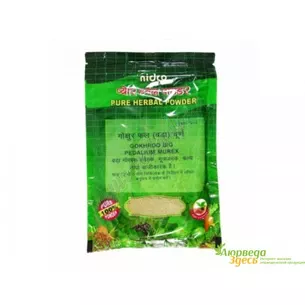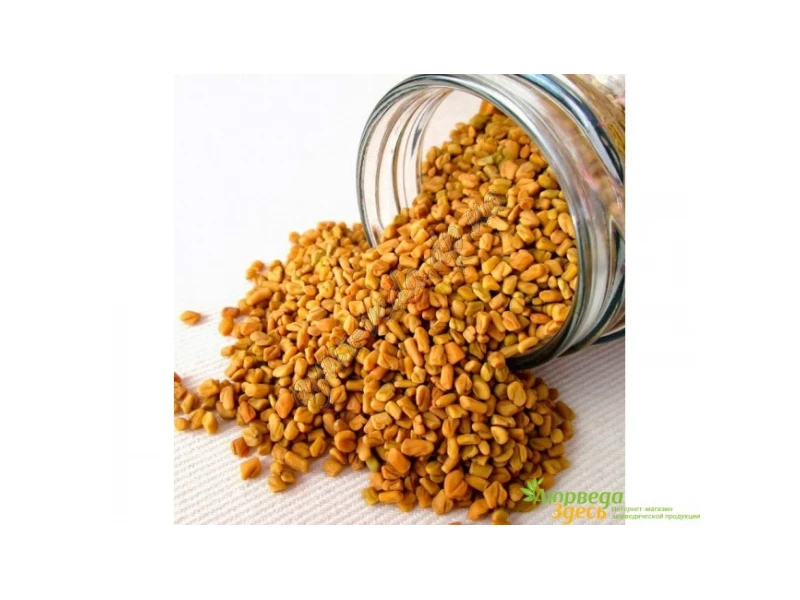
Packaging: 50 grams.
If people only knew what was in Khilba, they would sell it for the price of gold..."
"One hundred diseases and Khilba healing them..."
From ancient Arabic sayings, II-III centuries AD
Fenugreek (trigonella foenum-graecum L), hilba, helba, shambala - grows in South-Eastern Europe, India, Argentina, Egypt, France and Morocco, has a pleasant spicy, slightly bitter taste and a specific, unique smell.
Hippocrates highly valued the healing properties of fenugreek. In Ancient Egypt, fenugreek was used to facilitate childbirth. It is known from medical treatises on papyri found in Egyptian tombs that shambala was used not only in cooking, but also as an effective antipyretic. In the Middle Ages, fenugreek was used to treat premature baldness. In the East, beauties from the harems of rich emirs ate roasted shambala seeds to give roundness to the hips and breasts and an attractive fullness to the body.
Nowadays, the trick is used in cosmetology for hair growth. Indian women eat shamballa seeds with raw palm sugar after childbirth to strengthen the back, regain strength and stimulate the flow of breast milk. In China, this plant is used to soothe stomach aches and treat impotence. It is used in folk medicine, including Bulgarian and European. In Europe, it is used for painful menstruation. As recent studies have shown, fenugreek can lower blood sugar.
In Egypt and Ethiopia, shambala is a popular component of bread, which the Arabs call "khulba", and the Ethiopians call it "abish". Tourists brew fenugreek tea as a remedy against stomach spasms caused by unusual food. Shambhala is added to vegetable dishes for better absorption. Khilba is widely distributed in Armenia under the name "chaman". They are also included in the mixture of hops-sunela and curry spices. They contain a large amount of galactomannan, known as "fenugreek gum".
Fenugreek seeds are prescribed for:
- significant loss of body weight
- after heavy operations, especially on the organs of the gastrointestinal tract
- tuberculosis
- lung diseases
- with colds
- cough (including chronic), bronchitis
- gastric diseases (as enveloping)
- inflammation of the mucous membrane of the stomach, duodenum and small intestine, ulcer disease
- vitamin RR deficiency
- diseases of the spleen and liver
- skin diseases (eczema, purulent wounds, abscesses, boils)
- worms
- constipation and colic
- general body weaknesses
- painful menstruation
- diabetes
- dysentery
- allergic diseases
- influenza
- toothache
- neurasthenia
- arthritis
- anemia
- bladder diseases
- muscle pain
Contraindications: pregnancy (can provoke miscarriage, bleeding).
Recommendations for use:
When using in cooking, the seeds should be slightly fried at the beginning, otherwise they will acquire a bitter taste during cooking, do not take more seeds than indicated in the recipe. When fried, the seeds should remain light brown. If they have acquired a red-brown shade, then the dish will become bitter.
Medicinal raw materials are well-dried seeds that have a characteristic, pleasant smell. Minus Helba - it gives a specific wormwood smell of sweat (due to a large accumulation of toxins in the body). But if you observe daily body hygiene and use a sufficient amount of liquid, the smell can be avoided. If you drink tea from Shambhala, over time the embarrassing smell will change to a pleasant aroma of Shambhala.
Recipes:
In the treatment of skin diseases (eczema, purulent wounds, abscesses, boils), in case of cellulite and skin irritations. Crushed seeds are used externally in the form of poultices and warming compresses. To do this, it is necessary to boil 4 tablespoons of the powder in one glass of water, then strain and rub the resulting composition on the skin several times a day.
For hair loss. Or decoction: 1 tablespoon of seed powder per glass of water, boil for 10 minutes until gruel forms. Leave it for 15 minutes, then wash your hair with shampoo.
To normalize the metabolism in the body, you should take two teaspoons of crushed fenugreek seeds with honey every day.
For general strengthening of the body, with sexual disorders, diseases of the gastrointestinal tract and other ailments:
1) Powdered fenugreek should be taken teaspoon before a meal, together with jam, pour a tablespoon of crushed seeds with a glass of boiling water and infuse for 2 hours, drink 30-50 ml 4 times a day before a meal.
2) Boil the seeds for 7 minutes. Drink warm, adding sugar to taste. The seeds can be chewed, they improve the work of the stomach. You can dilute helba with milk. You can add a spoonful of honey, ginger (fresh), lemon instead of sugar. A warming drink will help with painful menstruation, indigestion and to increase lactation. The bitter taste is muffled by a small addition of fennel.
3) 1 teaspoon of crushed seeds per glass of boiling water per day.
4) Decoction: pour 1 tablespoon of crushed seeds with hot water, boil in a water bath for 10-15 minutes, cool, strain, adjust the volume of boiled water to the original volume and strain through three or four layers gauze Take 1/3 of a glass before meals in a chilled form.
In diabetes - in combination with other herbs that lower blood sugar.
pains in the throat, wounds in the oral cavity and on the lips. Gargling with a decoction.
In case of dysentery, it is recommended to drink an infusion of slightly roasted seeds.
It is the leaves of this plant that were widely used in divination by Indian Brahmins many hundreds of years ago. A separate chapter is devoted to fenugreek leaves in the famous Vedic herbal book "Aliada Ansata". Fenugreek is also mentioned in the manuscript "On the properties of objects designated for witchcraft". You will have to familiarize yourself with this book and the properties of fenugreek leaves described in it, if you, for example, plan to create a "Silver Amulet" artifact. It is not used in Russian cuisine, but it is widely distributed in Armenia under the name "chaman". Fenugreek is added to the dough to add flavor to bread, it is included in curry as a mandatory component, and the ego content in this mixture of spices is sometimes 15-20%.
Fenugreek seeds contain up to 30% of mucilage, which is used in the pharmaceutical and textile industries. The composition of spicy mixtures or seasonings includes ground ripe fruits. For example, fenugreek is the main component of the curry mixture. It is part of the mixture of turmeric, the mixture for maple syrup, "suneli hops", and adjika. In the USA, rum and maple syrup are flavored with fenugreek, sometimes added to the dough. In India, they prepare surrogate coffee from roasted seeds. Salad is made from young plants.
In addition, they are suitable for making chutna (an Indian condiment made from pickled mango) and marinades.
Fenugreek, fenugreek, shambala, 50 gr., Ayurveda Zdes
Ayurveda Zdes! - an online store of Ayurveda, cosmetics, spices, Indian clothing and jewelry. The best selection of Ayurvedic products in Ukraine! Beauty and health for you and your family! http://aur.in.ua/#ayurvedasomewhere http://ayur-veda.dp.ua/